


Built For
Instruments: Stocks
Trading Style: Scalping/Day Trading
Strategy Overview
This playbook focuses on shorting small-cap stocks that gap up sharply, usually driven by hype, thin pre-market volume, or promotional news rather than real business strength.
These stocks are often weak companies that use sudden spikes in liquidity to sell shares. In the past, many of these setups faded cleanly throughout the day. In recent years, increased volume and more traders have changed that behavior. Failed fades now often lead to sharp squeezes before the stock eventually moves lower.
This approach combines a systematic foundation, built on data and repeatable behavior, with controlled discretion such as time-based rules, behavior checks, and share recycling. This allows the strategy to adapt to current market conditions without trying to guess tops or relying on gut feel.
The objective is to:
- Avoid guessing tops on the front side.
- Stay protected during manipulation and liquidity traps.
- Capture profits from fades, ranges, and backside weakness.
- Reduce large losses through structured trade management.
Stock Selection Criteria
Only stocks that meet the following conditions are considered:
Market Capitalization
- Preferred: under $100M
- Maximum: ~$200M
Higher market cap stocks are avoided due to increased legitimacy and reduced pump-and-dump behavior.
Institutional Ownership
- Preferred: under ~40%
Higher institutional ownership often signals more stable companies that do not exhibit the same extreme fade behavior.
Extension / Gap Strength
- Focus on stocks with large percentage gaps
- Smaller moves (around 20–40%) are avoided, as recent market conditions have expanded volatility and range, making these moves less reliable.
Core Setups
Gap-Up Short with Fade Validation (ADF Behavior)
The stock gaps up strongly in pre-market, often on low volume, and holds its gains into the open to attract liquidity.
Entry Timing
- Entry is considered after the open, not in pre-market.
- The stock must begin fading and show weakness relative to the open price.
- The key confirmation comes from the 10:00 a.m. behavior check.
Primary Entry Condition
- The stock is trading below the open price by ~10:00 a.m.
- Volume is decreasing as the price moves lower.
Entry Execution
- Short entries are taken into pops or bounces once downside behavior is confirmed.
- Avoid shorting the exact low of a flush.
Invalidation
- If the stock holds above the open at 10:00 a.m., the setup is considered weak, and risk is reduced or removed.
Backside Parabolic Short (Primary Edge)
A stock has already made a large parabolic move. The goal is to avoid guessing the top and wait for confirmation that the move is failing.
Requirements
- A large move has already occurred.
- Signs of topping appear (upper wicks, failed pushes, slowing momentum).
- Volume begins to decline as price fades.
Execution
- Do not short the first sign of weakness.
- Wait for clear confirmation that the move is shifting from front-side to backside.
- Avoid shorting lows.
- Enter on bounces during the fade for better positioning.
Expectation
- Downside targets are based on historical pullbacks, often around 30–40%.
- The focus is consistency, not maximizing every move.
This setup works best earlier in the trading day.
Multi-Halt Exhaustion Short
Low-float stocks enter repeated up-halt sequences due to thin liquidity and aggressive momentum trading.
Entry Timing
- No entries are taken during the early halts.
- Entries are only considered after several up-halts, typically once exhaustion is likely.
Primary Entry Condition
- The stock has halted to the upside multiple times (commonly 4–5).
- Resume candles show brief dips followed by pushes, indicating forced covering.
- The overall extension is historically extreme.
Entry Execution
- Initial shorts are taken after halt exhaustion, not during early momentum.
- Entries are based on how far the stock has already extended, not on predicting the next halt.
Risk Awareness
- These trades can be volatile and illiquid.
- Position size must be kept conservative.
Risk Management Rules
Stop Logic
Pre-market highs are not used as stops:
Breaking pre-market highs often triggers short covering before price reverses.
Fixed Percentage Wide Stops:
- Stops are set at a fixed percentage from entry
- Wider stops reduce the chance of being stopped out by manipulation
- The goal is staying in the trade, not tight precision
Trade-Off
- Higher win rate
- Larger individual losses
- Focus is on the overall profit factor, not the textbook risk-to-reward ratios
Outlier Risk Awareness
- Low liquidity and halts can push prices beyond expected levels
- Position sizing must stay controlled
- No single trade should put the account at risk
Trade Management Rules
10:00 a.m. Behavior Rule
- Below the open: downside continuation is more likely
- Above the open: reduce risk or consider exiting
30-Minute Validation Rule
- If the trade is working after ~30 minutes, holding makes sense
- If the price is reclaiming or stalling, reassess the position
Ongoing Context Checks
Throughout the session, evaluate:
- Volume behavior.
- Signs of manipulation.
- Overall strength or weakness in small caps.
- Sympathy moves in other gappers.
Recycling Framework
Many small-cap stocks move in ranges instead of clean fades. Recycling allows multiple profit opportunities while limiting damage when prices chop.
Method
- Take partial profits into sharp drops near support.
- Re-enter shorts on bounces near prior support that becomes resistance.
- Repeat within a defined range.
Benefits
- Increases total profits.
- Reduces losses on failed fades.
- Lowers locate costs by reusing shares.
- Builds a profit cushion that reduces emotional pressure.
When to Use Recycling
When a stock grinds against the position and stops trending cleanly, the focus shifts from directional conviction to managing risk and minimizing damage.
Time-of-Day Rules
Preferred Window
- Pre-market through early morning (4:00 a.m. – 10:00 a.m.)
- Earlier setups have more time to play out.
Reduced Edge
- After ~12:00 p.m., edge decreases.
- Crowding and manipulation increase.
- Less time remains for patterns to work.
Trading is usually reduced or stopped after midday.
Pros and Cons of the Strategy
This Strategy is designed to deliver high-quality, repeatable setups — but like any trading strategy, there are key things to understand before using it.
Note: The cons listed here aren’t disadvantages. They are things to be aware of — important characteristics that require patience, discipline, and proper management to make the strategy work effectively.
Pros
- Proven, data-backed edge.
- Clear and repeatable framework.
- Less reliance on intuition or tape reading.
- Flexible enough to adapt to market changes.
Cons
- Requires regular backtesting and review.
- Wide stops feel uncomfortable to many traders.
- Hard-to-borrow fees can reduce profitability.
- Broker choice is important.
- Risk of extreme moves in illiquid stocks.
Trade Breakdown
Trade Example: CRCL — Multi-Day Backside Short
Market Context
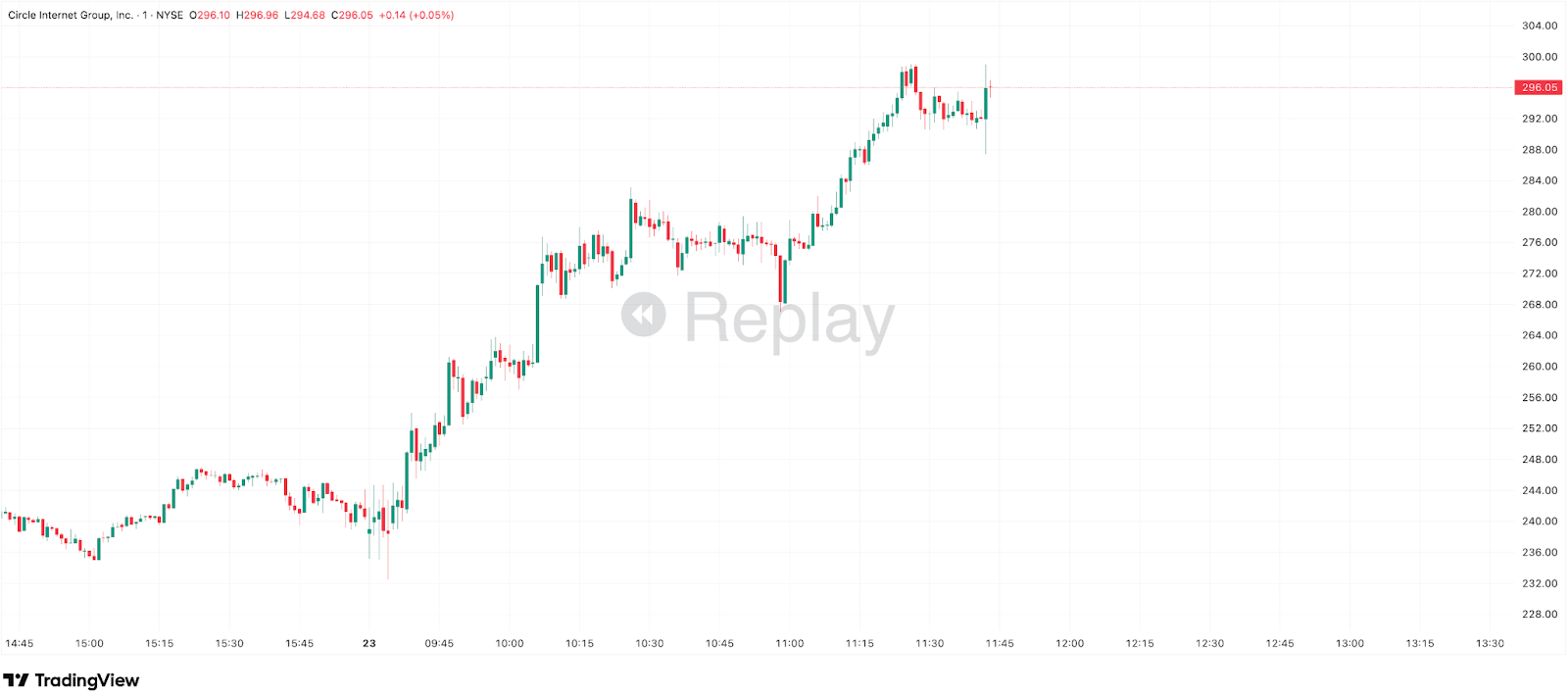
CRCL was in the middle of a multi-day run and had become very extended. This was no longer a front-side momentum trade. The focus was on a backside short once the price showed signs of exhaustion.
Because of how extended the move was, the goal was to wait for confirmation that momentum was shifting, rather than trying to guess the top early.
Setup
Backside Parabolic Short
Entry
- Price reached an area where the move began to stall.
- Momentum shifted, with multiple red candles appearing
- Selling pressure became visible, confirming a change in behavior
A short position was taken after the shift in price action, not during the initial run.
Trade Management
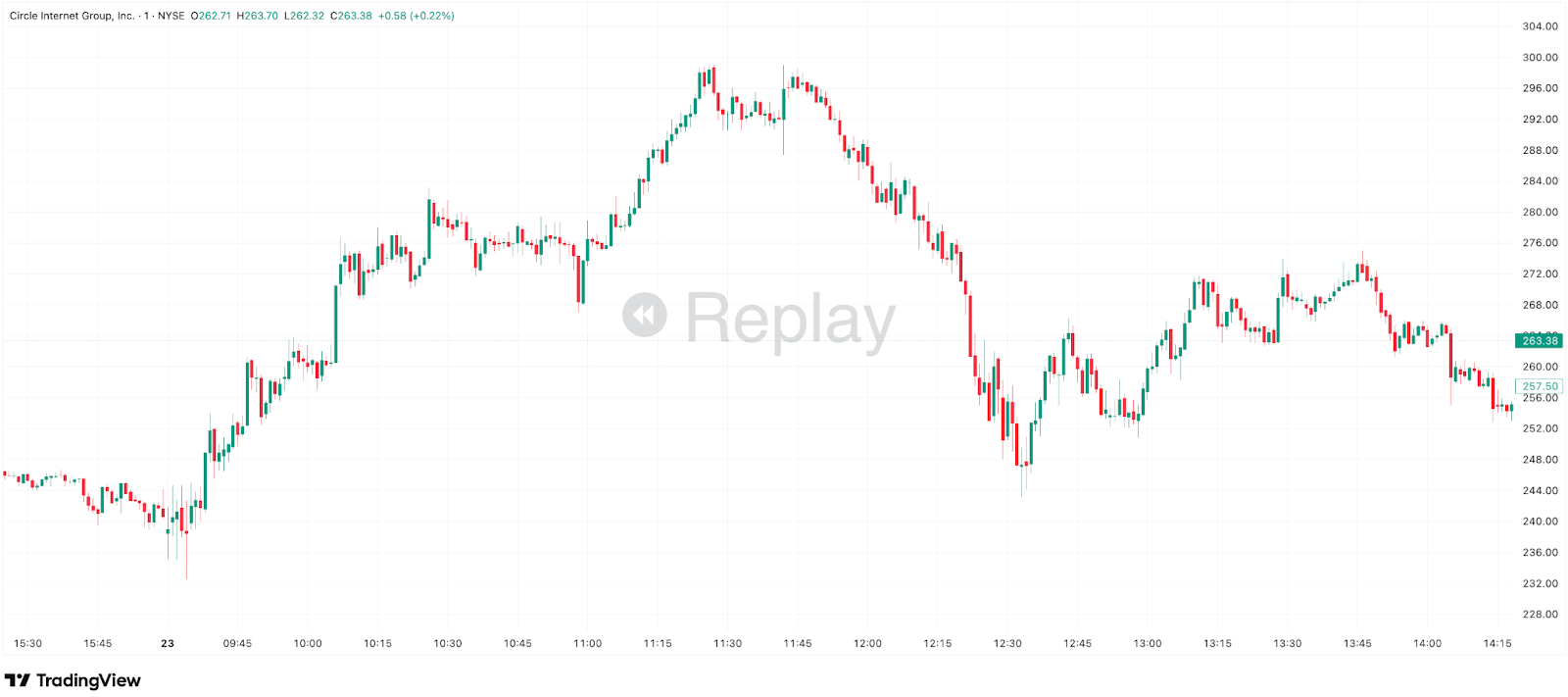
- No immediate profits were taken on the first push down.
- The position was held as downside momentum continued.
- A prior day’s close was identified as a level where a bounce was likely.
At this level, partial profits were taken to:
- Lock in gains.
- Reduce risk.
Recycling
- After partial profits were taken, the price bounced.
- Shorts were re-entered on the bounce into resistance.
- Additional profits were taken on the next sell-off.
This process was repeated to extract more profit from the same range instead of relying on a single entry and exit.
Result
The trade was profitable due to:
- Waiting for the backside confirmation.
- Respecting key levels.
- Using recycling rather than holding for a single move.
Key Takeaway
Once a stock is extended and on the backside, patience and recycling can outperform a single-entry, single-exit approach. Managing the trade around key levels reduced risk and increased overall profitability.
How to Backtest This Shorting Strategy
The fastest way to test this Shorting Strategy is with TradeZella's automated no-code backtesting. Define your rules in plain English, hit run, and TradeZella runs them across 11+ years of historical data in seconds, then shows you every individual trade along with your win rate, profit factor, and expectancy instantly, without you stepping through a single chart. It is the quickest way to see whether the setup holds up before you risk a dollar.
You can also test it manually by replaying the market bar by bar. Load 11+ years of historical data, set up your chart the way you trade live, and replay sessions bar by bar from the open through midday. Find a small-cap stock that gaps up sharply on hype, then run your stock selection filters and wait for the setup: a gap-up short validated by the 10:00 a.m. behavior check, a backside parabolic short once the move is clearly failing, or a multi-halt exhaustion short after repeated up-halts. Short into pops rather than the lows, set a fixed-percentage wide stop, and practice recycling by covering into drops near support and re-shorting bounces into resistance. Use automatic position sizing and drag your stop and target directly on the chart. Every backtested trade gets logged automatically with your entry, exit, position size, and P&L. Tag each setup type and your recycle entries, add notes, and review the same way you would a live trade. After 30 to 50 trades, you can see your win rate, profit factor, and expectancy on each setup. Manual replay is the best way to build screen time and a real feel for the setup.
When you start trading live, import your live trades into TradeZella, the AI trading journal that does the journaling for you. Your backtest results and live results live in the same platform, so you always know how the strategy performs in testing vs how it performs with real money, without switching between tools or maintaining separate spreadsheets.
Start Backtesting This Strategy Using TradeZella
Frequently Asked Questions
What is the Shorting Strategy?
The Shorting Strategy focuses on shorting overextended small-cap stocks after hype-driven moves, usually gap-ups fueled by thin pre-market volume or promotional news rather than real business strength. Instead of guessing tops on the front side, it waits for exhaustion and backside weakness, then manages risk with wide stops and structured trade management. It blends a data-backed, repeatable framework with controlled discretion like time-based rules, behavior checks, and share recycling so it can adapt to current market conditions.
What stocks does this strategy look for?
It targets small-cap stocks with a market cap preferably under 100 million dollars and a maximum around 200 million, since higher-cap names tend to be more legitimate and show less pump-and-dump behavior. Institutional ownership is preferably under about 40%, because heavy institutional ownership often signals more stable companies that do not fade the same way. The focus is on large percentage gaps, while smaller moves of roughly 20% to 40% are avoided as less reliable in today's higher-volatility conditions.
What are the core setups in this strategy?
There are three. The Gap-Up Short with Fade Validation enters after the open when the stock is trading below its open by about 10:00 a.m. on decreasing volume, shorting into pops rather than the lows. The Backside Parabolic Short waits for a large parabolic move to clearly fail, with topping signs and declining volume, then enters on bounces during the fade. The Multi-Halt Exhaustion Short waits for a low-float stock to up-halt several times, commonly four or five, before shorting the exhaustion with conservative size.
What is the recycling framework?
Many small caps move in ranges instead of fading cleanly, so recycling lets you take multiple profit opportunities within the same range. You take partial profits into sharp drops near support, then re-enter shorts on bounces back into prior support that becomes resistance, and repeat within a defined range. This increases total profit, reduces losses on failed fades, lowers locate costs by reusing shares, and builds a profit cushion that eases emotional pressure when a stock chops against the position.
Why does this strategy use wide stops?
Pre-market highs are deliberately not used as stops, since breaking them often triggers short covering right before price reverses. Instead, stops are set at a fixed percentage from entry, which reduces the chance of being shaken out by manipulation. The trade-off is a higher win rate but larger individual losses, so the focus is on overall profit factor rather than textbook risk-to-reward. Because halts and low liquidity can push price beyond expected levels, position sizing must stay controlled so no single trade risks the account.
Can I backtest the Shorting Strategy?
Yes. You can test this strategy using TradeZella's backtesting with 11+ years of historical data. Replay sessions bar by bar, screen for the gap-up small-cap setup, apply the 10:00 a.m. behavior check and backside or multi-halt confirmation, short into pops with a fixed-percentage stop, and practice recycling around key levels. Every trade logs automatically with entry, exit, position size, and P&L, and you can tag each setup and recycle entry separately. After 30 to 50 trades you can see your win rate, profit factor, and expectancy before risking real money.
What is TradeZella backtesting?
TradeZella backtesting lets you test a trading strategy against 11+ years of historical market data across forex, futures, stocks, and crypto, down to seconds-level timeframes. You can do it two ways. Replay the market bar by bar and place trades as if you were trading live, with your own timeframes, automatic position sizing, and stops and targets you drag right on the chart, and every trade logs automatically with entry, exit, size, and P&L. Or use automated no-code backtesting: define your strategy rules in plain English and the engine runs them across years of data in seconds, returning every individual trade it took with the exact setup drawn on the chart, so you see why each trade fired instead of just an equity curve. Zella AI then analyzes the results and flags what to fix.