
We compare manual trading journals — notebooks, Google Docs, and notes apps — against TradeZella, an AI Trading Journal, to help you decide when a manual approach is enough and when automation actually improves your trading.
Manual journaling is any non-dedicated method of tracking your trades — a physical notebook, Google Doc, Word file, notes app, or even a basic spreadsheet. Most traders start here because it's free and forces reflection. But for active traders, it costs 2–4 hours a week in data entry, cross-referencing notes, and manual analysis. TradeZella eliminates that work: trades import automatically from your broker, patterns surface without prompting, and your weekly review takes 20 minutes instead of an afternoon. You keep the reflection. You stop doing the data work.
| Feature | TradeZella | Manual Journaling |
|---|---|---|
| Starting Price | $29/mo (Essential) | Free (notebook, Word doc, notes app) |
| Broker Auto-Sync | 500+ (automatic) | None — manual entry only |
| AI Features | Zella AI — all plans (trading-specific) | None |
| Trade Replay | Yes (Premium) | No |
| Backtesting | Unlimited (all plans) | No |
| Pattern Detection | Automated across full trade history | Manual — limited to what you notice |
| Best For | Quantitative + qualitative improvement | Reflection and psychological awareness (fewer than 20 trades/month) |
A manual journal captures what you choose to write down. That's valuable for reflection — but it misses the patterns in your trade data that you'd never notice by reading notes.
You might write 'bad entry, moved too fast' in your notebook. But you can't easily see that every time you enter a trade within the first 15 minutes of the session, your average loss is 3x your average win. That pattern exists in your data. It only becomes visible when you analyze hundreds of trades at once.
TradeZella does what a manual journal can't. Your trades import automatically from your broker — no entry, no copy-paste. Performance reports run on every trade across setup, time of day, symbol, and behavior. You don't have to know what to look for. The patterns that cost you money surface on their own.
Rule of thumb: If you take fewer than 20 trades per month, manual journaling can work. Past that threshold, manual entry becomes a time sink. Past 50 trades per month, it's unsustainable — most traders either stop or start skipping entries.
See how TradeZella reveals your edge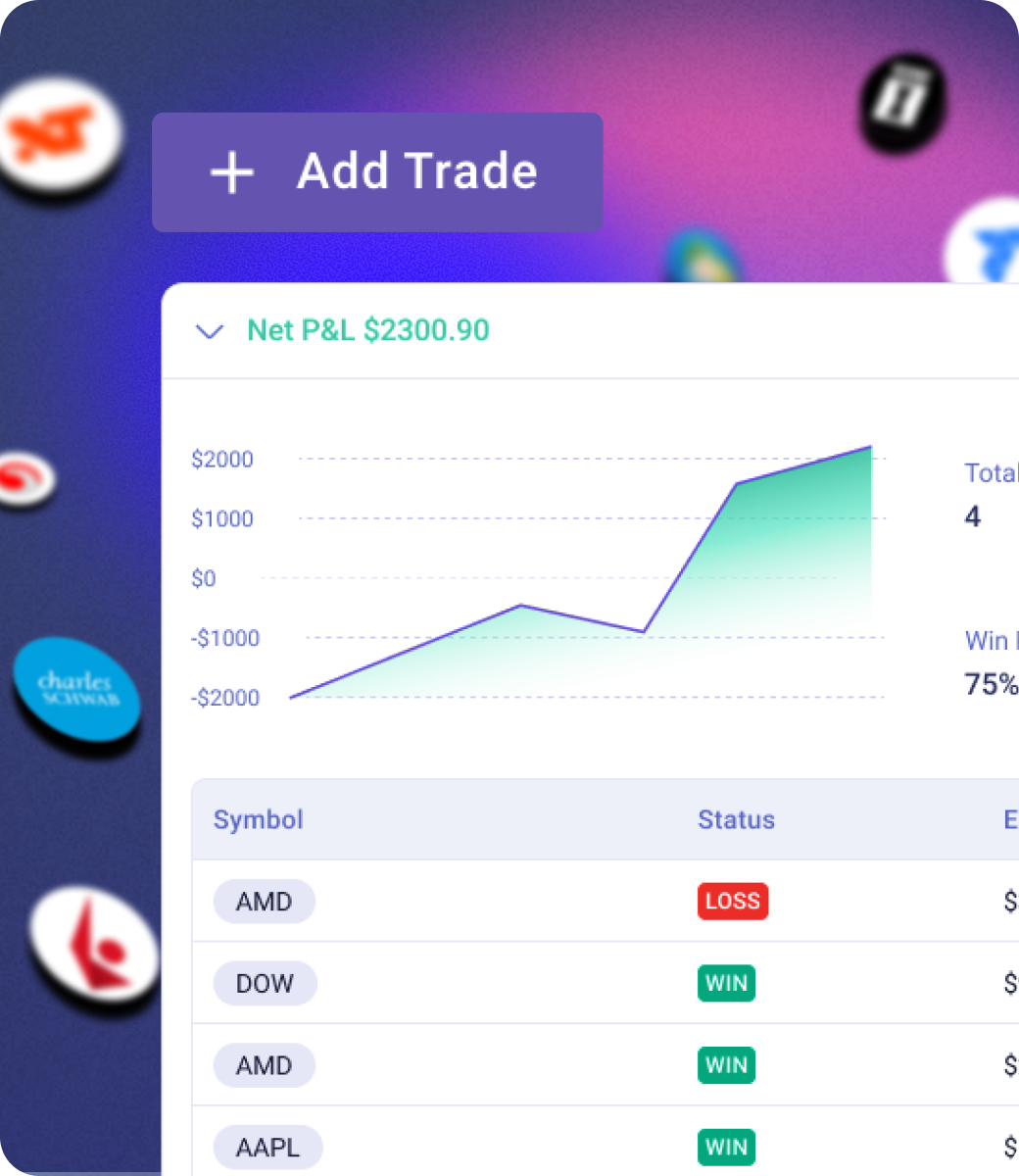
Self-review is limited by your own biases. You notice the trades that felt significant and miss the quiet patterns that compound over time. You remember the big winners and under-weight the small consistent losers. Manual review is also slow — going through a week of trades in a notebook takes hours.
Zella AI is TradeZella's built-in AI Trading Partner — available on every plan, not locked behind a premium tier. Some comparisons describe TradeZella as a visual interface with no AI. That's inaccurate. Zella AI is a core part of every TradeZella subscription.
Zella AI is unbiased and comprehensive. It reads every trade, every journal note, and your strategy rules, then surfaces what's actually happening across your full history. Four automated agents run without prompting: Market Sentiment Briefing each morning, Auto-Tagger on every imported trade, Session Review at the end of each day, and Automated Backtesting for strategy validation — with more on the way.
You can also chat with Zella AI directly: ask what your worst setup is, why your drawdowns happen, or whether your risk management is improving over time. Zella AI uses 500–1,000 credits per month depending on your plan, with a First Import Analysis on signup and weekly and monthly reports delivered automatically.
Explore Zella AI.png)
There are two ways manual journaling fails. The first is time: pulling trade data, cross-referencing notes, calculating stats by hand, and scanning for patterns takes 2–4 hours per week for an active trader. The second is more damaging — friction kills consistency. When logging a trade takes more than a minute, most traders eventually stop doing it. The journal that made you better disappears, not because you gave up on journaling, but because the process became a burden.
TradeZella generates weekly performance reports automatically. Session Review writes your end-of-day recap. Zella AI flags the patterns worth your attention. Trade replay lets you study any specific entry in minutes rather than trying to reconstruct it from memory. The entire review process compresses from hours to 20–30 focused minutes.
See how TradeZella handles review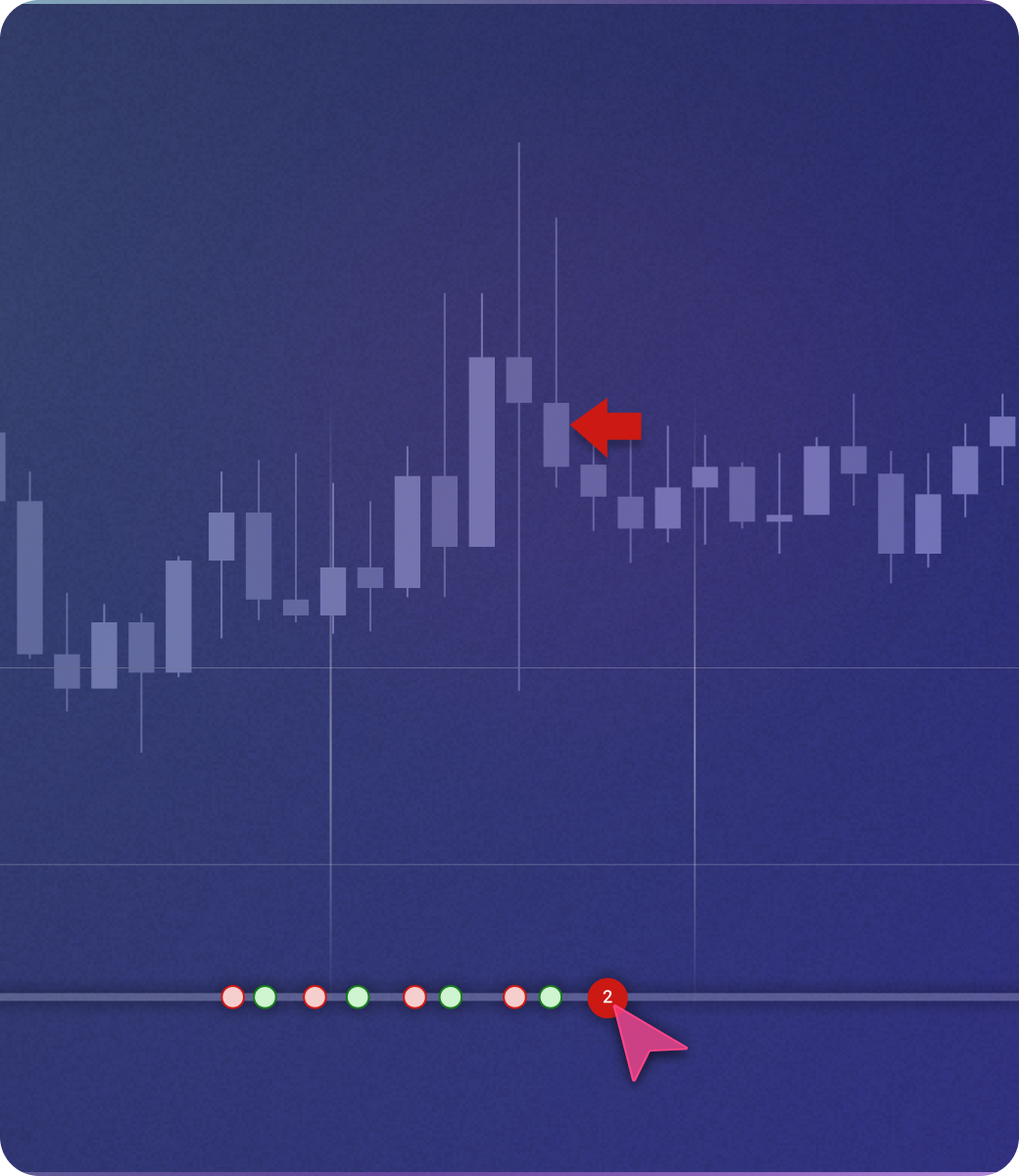
TradeZella includes per-trade emotion and psychology tagging — you can log your confidence level, mental state, and any notes alongside each imported trade. The difference is that TradeZella then correlates that data with your performance automatically.
When you manually write 'felt anxious before this trade,' that note lives in your journal. When you tag an emotion in TradeZella, Zella AI can surface patterns like: every time you log anxiety before a trade, your average P&L on that session is negative. That's the connection between psychology and performance that manual journals gesture toward but can't quantify.
The best approach is often both: use TradeZella's tagging for quantitative psychology tracking, and keep a separate note or journal for longer qualitative reflections.
See Zella AI in action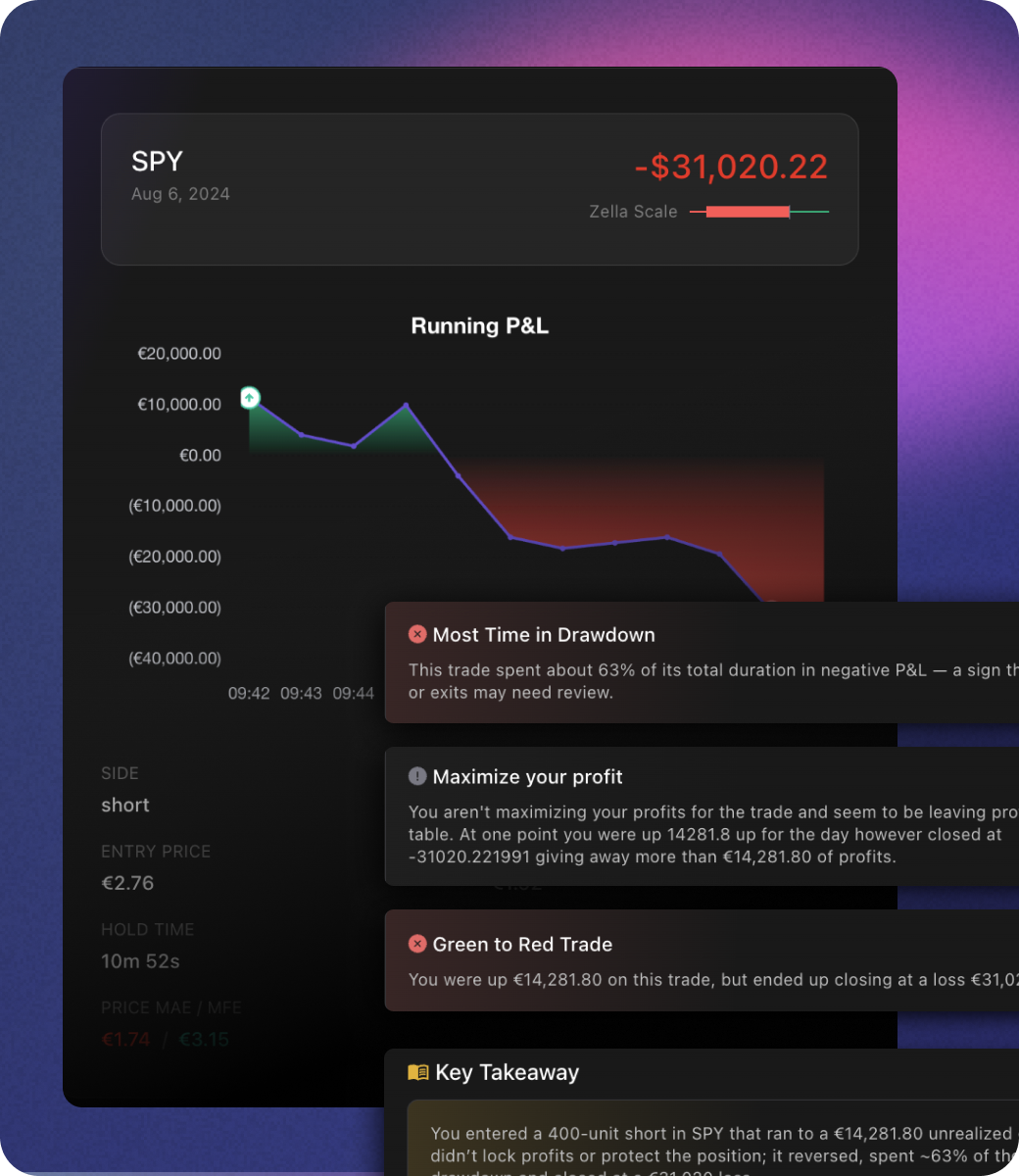
Manual journaling is completely free. TradeZella starts at $29/month (Essential) or $24/month billed annually, with Zella AI, 500+ broker auto-sync, and unlimited backtesting included. The question isn't whether TradeZella costs more — it does. The question is whether automated analysis, AI coaching, and replay tools are worth $29/month to you.
AI Trading Journal
Any non-dedicated method
Manual journaling has real advantages worth acknowledging.
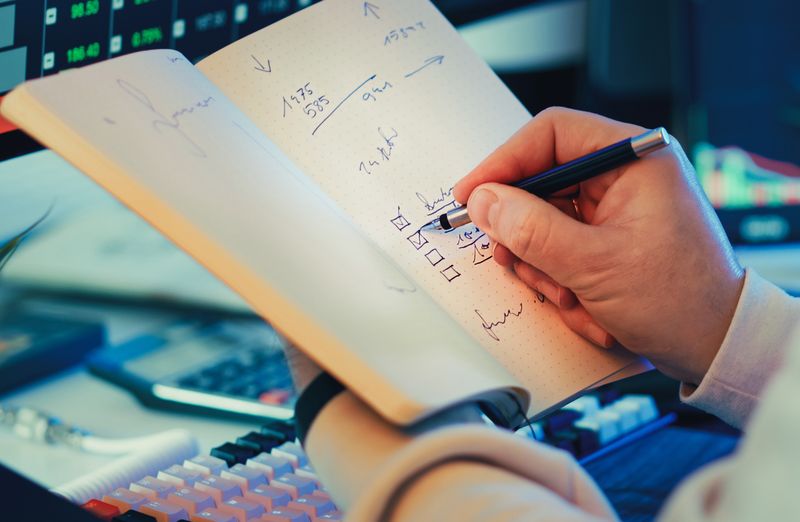
Photo by Jakub Zerdzicki / Pexels
A notebook costs a few dollars. A notes app is already on your phone. There's no subscription, no platform risk, and no commitment. For traders who aren't ready to invest in a dedicated platform, manual journaling is genuinely better than not journaling at all.
Writing by hand or in a simple doc takes more cognitive effort than clicking through a platform. Some traders find that the deliberate act of writing deepens their self-awareness and builds better review habits.
Your notebook doesn't upload to any server. A local Word document or physical journal keeps your trade data completely private. For traders sensitive about data privacy, manual journaling has no third-party risk.
A blank page captures whatever you want — unusual setups, market context, personal observations. No predefined structure, no required fields, no platform limitations on what you can record.
.png)
Zella AI is TradeZella's AI Trading Partner — it reads your trades, rules, and journal, then gives you analysis in plain English from anywhere in the app. Chat to analyze performance, refine strategies, or review a session. Four agents run automatically: Market Sentiment Briefing, Auto-Tagger, Session Review, and Automated Backtesting — with more on the way. AI Insights delivers a First Import Analysis plus weekly and monthly reports.
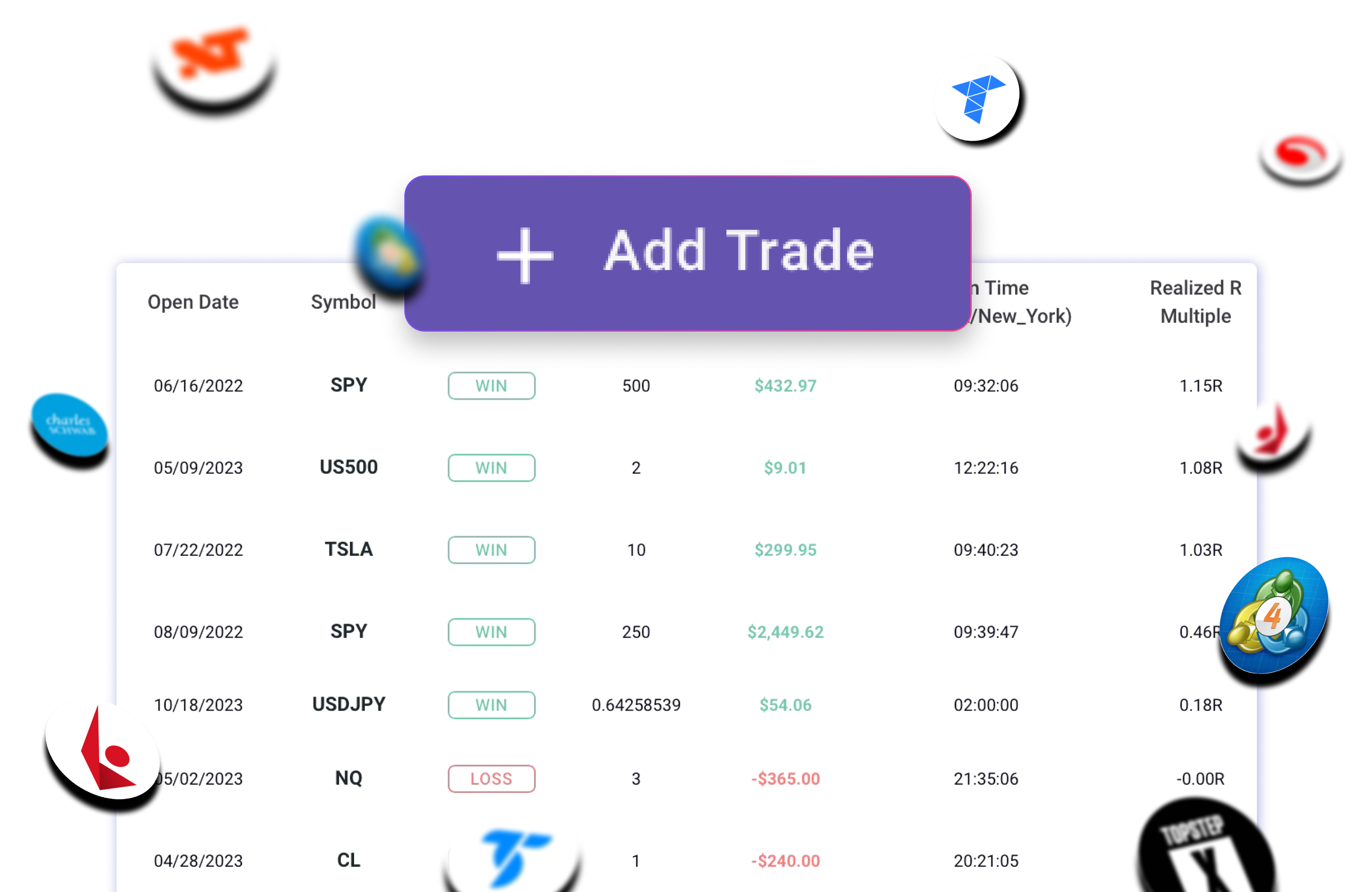
Connect your broker once and every trade imports automatically — no CSV exports, no manual entry, no copy-paste. For traders keeping a manual journal, that's hours of data work eliminated every week. TradeZella supports 500+ brokers including futures, forex, equities, and prop firm platforms. Your journal stays current without touching it.
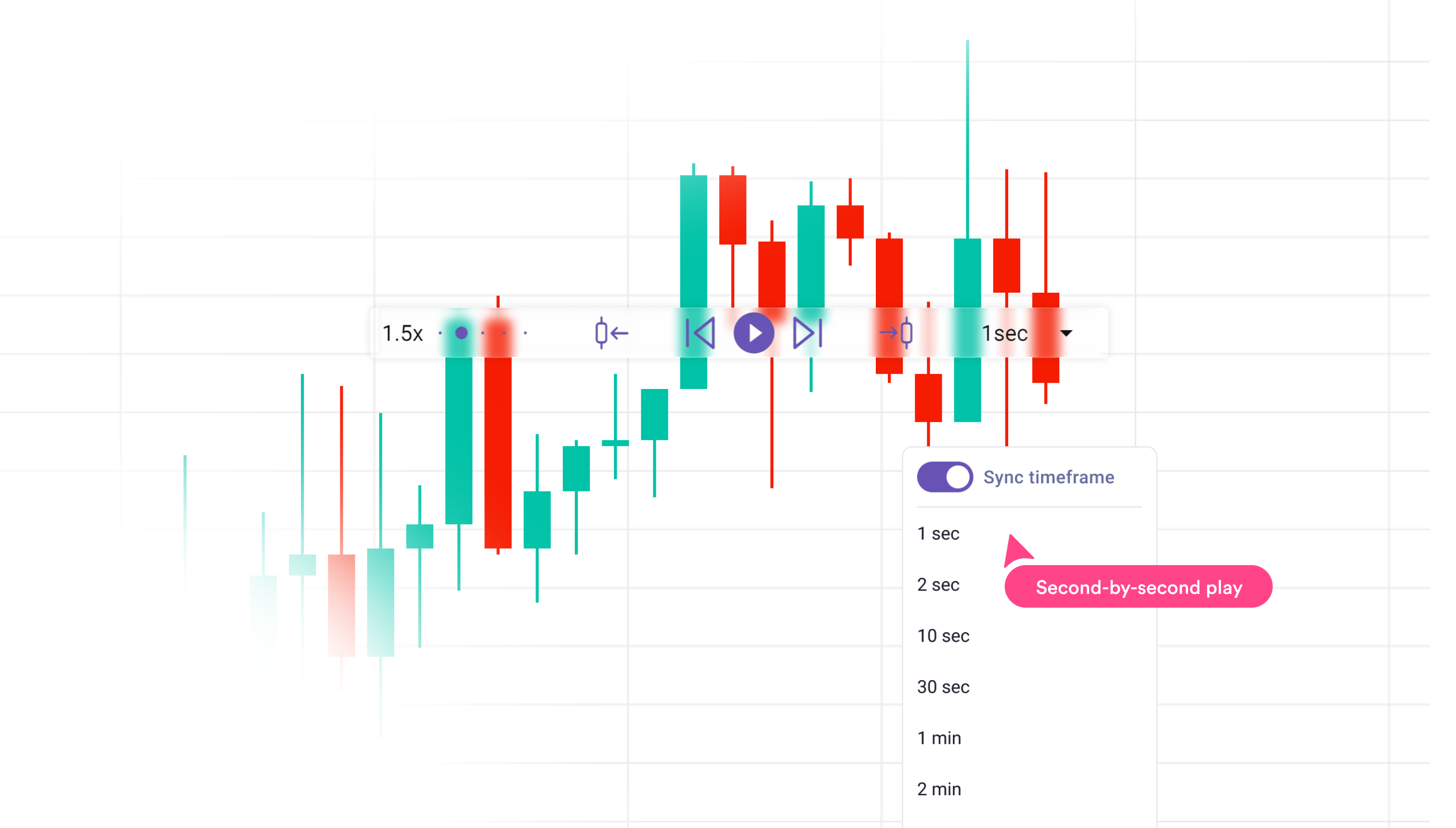
Replay every trade tick-by-tick to see exactly what happened — your entry, your exit, the price action you missed. Trade replay turns post-session review from guesswork into a precise diagnosis. Included on Premium plans.
.png)
Test any strategy against 11+ years of historical data before risking real capital. TradeZella's backtesting engine validates setups, calculates win rate and expectancy, and shows exactly where a strategy breaks down — on all plans.
Manual journaling builds habits and self-awareness. For traders just starting out, it's a meaningful first step — and it's free. The limitation is that it's qualitative by nature. You notice what you write down. You miss what you don't know to look for.
TradeZella is an AI Trading Journal that adds the quantitative layer manual methods can't: automatic trade capture from 500+ brokers, AI-driven pattern detection, and replay tools that make your journal an active improvement system rather than a passive record. Many experienced traders do both — TradeZella for data and analysis, a notebook or notes app for longer reflections and pre-market thinking.
Our recommendation: If you're building the journaling habit for the first time, start manually — any journal is better than none. When you're ready to go beyond reflection and find the specific patterns hurting your P&L, TradeZella is the natural next step.
We set up both workflows with the same set of test trades across futures, equities, and options. For manual journaling approaches we measured setup time, manual entry friction, and how long it takes to get from raw trade data to a usable insight. For TradeZella we measured broker connection time and time-to-first-AI-insight.
All prices reflect publicly listed rates as of June 2026. We note which tier unlocks each feature rather than listing base pricing and implying everything is included.
Each platform was graded on six criteria that predict whether a trading journal will actually make you a better trader:
Full transparency: We built TradeZella because we couldn't find a single platform that combined broker auto-sync, always-on AI, and trade replay. That makes us experts on what TradeZella does well — and honest about where it falls short. We've done our best to represent manual journaling approaches accurately. If TradeZella isn't the right fit for your trading style, we'd rather you know that upfront.
TradeZella adds everything a manual journal can't: automatic trade capture, Zella AI pattern detection, tick-by-tick trade replay, and unlimited backtesting.
Get Started with TradeZella