


Built For
Instruments: Futures/Forex
Trading Style: Swing Trading
Strategy Overview
This strategy is designed to capture high risk-to-reward trades by trading only during the London session, when momentum and volatility tend to align. It follows a clear, structured model that uses stacked EMAs, fair value gaps (FVGs), and time-based entry conditions to identify precise, high-probability setups.
The strategy is centered around a specific entry formation known as the “Trident Pattern”, which combines a clean FVG with a doji candle wick into the FVG’s midpoint, followed by a confirmation candle. The trade is executed only when all conditions are met, including strict trend alignment using multiple EMAs and confirmation from higher timeframe bias.
While it favors long setups on naturally bullish assets like Gold or the Nasdaq, the model is directional and can be applied to both longs and shorts. The focus is on quality over quantity, waiting patiently for ideal setups during a narrow trading window and maximizing reward through trend continuation on the daily chart.
Strategy Rules
Time of Day: The London Kill Zone
- Only trades between 3:00 AM and 6:30 AM New York time.
- Entries must occur inside this window. This kill zone gives the highest probability entries, based on years of backtesting.
Timeframes Used
- 30-minute chart is the only chart used to find the entry.
- The daily chart is used for overall bias and to target take-profit levels.
Indicators
The strategy uses a set of EMAs to define trend structure and momentum clarity:
- 5 EMA
- 9 EMA
- 13 (or 15) EMA
- 21 EMA
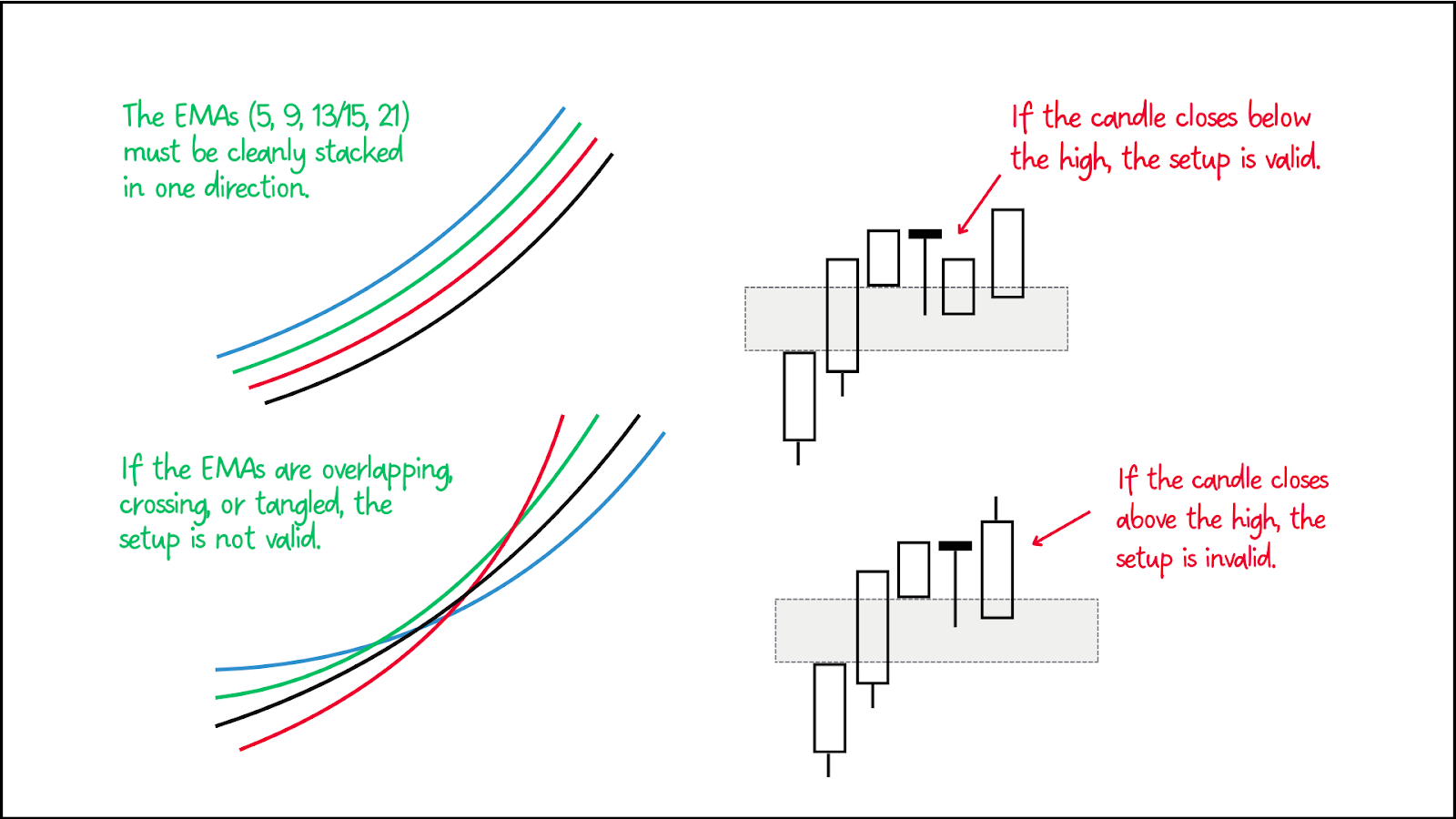
These EMAs must be clearly stacked in the direction of the trade. If they are crossing or tangled, the setup is invalid.
- 200 EMA: for trend bias
- Above 200 EMA → only take longs
- Below 200 EMA → only take shorts
- Bull Trading Candle Strength Indicator:
- Green candle = strong bullish
- Blue = mild bullish
- Red = strong bearish
- Black = mild bearish
Helps confirm momentum on the daily chart
Entry Criteria – The Trident Pattern
Once you’re inside the London Kill Zone, here’s exactly what you look for:
Fair Value Gap Forms
Look for a 3-candle FVG to form on the 30M chart
- Must occur between 2:30 and 4:00 AM
- Ignore FVGs outside the kill zone
Identify the 50% Level (Consequent Encroachment)
Mark the midpoint of the FVG. This is where you want to see a reaction.
Wait for the Trident Candle
- A small-bodied doji candle must form next.
- The candle must wick into the FVG 50% zone.
- This wick shows that sellers tried to push the price down, but buyers were strong enough to bring it back.
Confirm with Next Candle
The candle after the doji must close below the doji high. If it closes above the doji high, the trade is invalid.
Enter the Trade
You can enter the market on that confirmation candle or place a limit at the FVG 50% if you’re early
Stop Loss:
- Below the low of the candle that forms FVG
- On Gold, a hard stop isn’t used. This approach is based on backtesting, which showed that Gold often makes deep liquidity wicks before running. Using a closing candle filter prevents getting stopped out prematurely.
Take Profit & Trade Management
- Use the daily structure to guide your take-profit decisions.
- The idea is to ride the trend for as long as it remains intact.
Consider closing the trade if:
- The EMAs begin to reverse direction, signaling a potential shift in trend.
- A significant bearish candlestick appears that invalidates the current structure.
Valid Pairs
- USDJPY
- EURUSD
- GBPUSD
- NZDUSD
- USDCAD
- Gold (XAUUSD)
Pros and Cons of the Strategy
This model is designed to deliver high-quality, repeatable setups, but like any trading method, there are key things to understand before using it.
Note: The cons listed here aren’t disadvantages. They are things to be aware of — important characteristics that require patience, discipline, and proper management to make the model work effectively.
Pros
- High Risk-to-Reward: Designed to capture large moves relative to risk, offering strong reward potential on each trade.
- High Win Rate: Around 90% when all rules are followed.
- Clear, Simple Rules: No overcomplication, just trend, time, and pattern.
- No Overtrading: Only trades 3.5 hours per day max.
- Works best with Trending Markets: Especially strong on Gold and Nasdaq.
Cons (Things to Be Aware Of and Manage)
- Patience Required: Setup may only appear a handful of times per year.
- Small Time Window: You must be awake and ready during London hours.
- PNL Fluctuations: Price may go +10R and pull back to +5R before running again.
- Needs a Fully Balanced Prop Firm: Hybrid drawdown models can ruin trades due to equity resets.
- Not for Everyone’s Psychology: If you can’t sit on your hands, you’ll ruin the edge.
Trade Breakdown
Asset: USDJPY
Timeframe Context
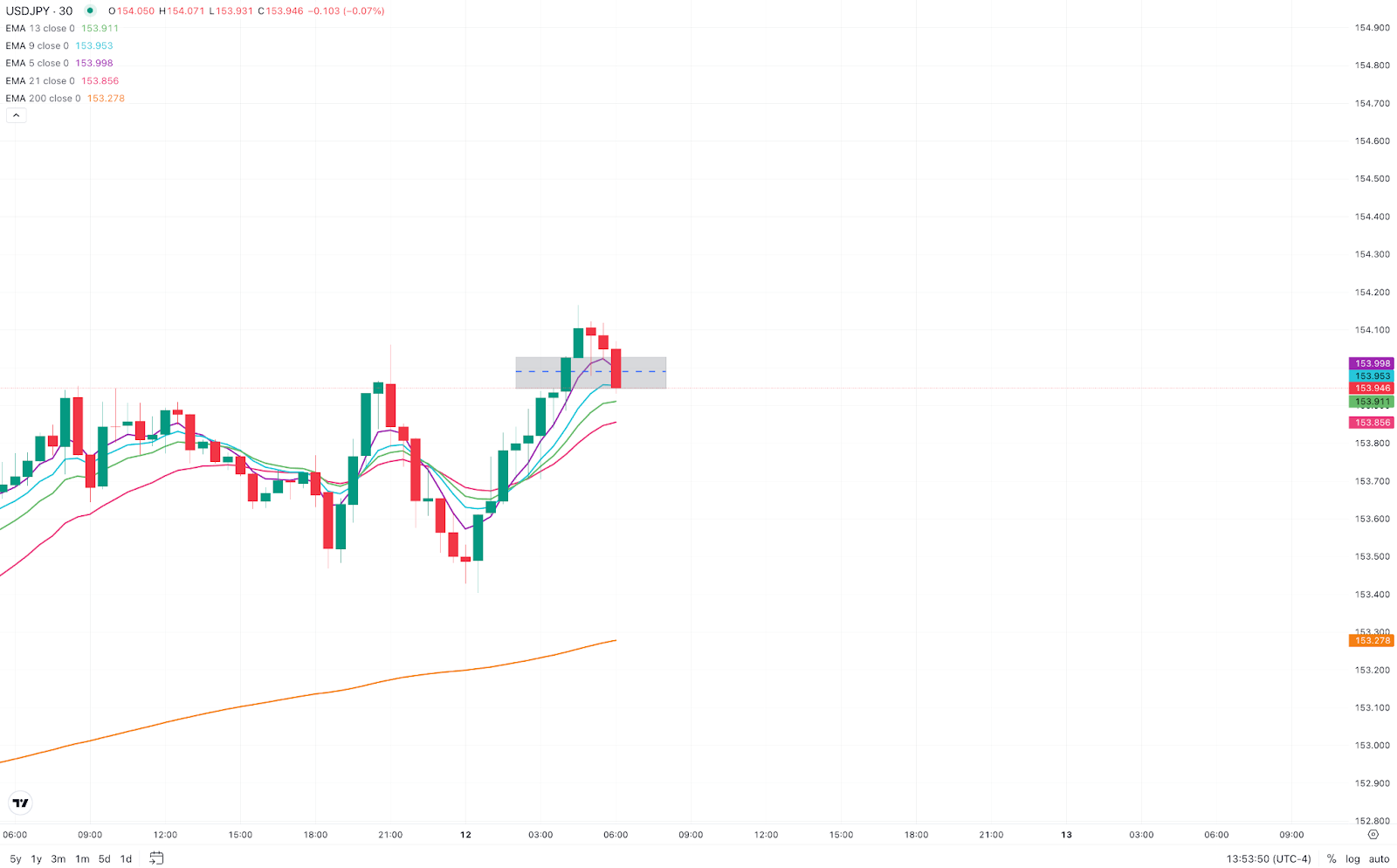
- Price is trading above the 200 EMA, confirming a bullish market bias.
- All EMAs (5, 9, 13, 21) are cleanly stacked, showing strong upward momentum.
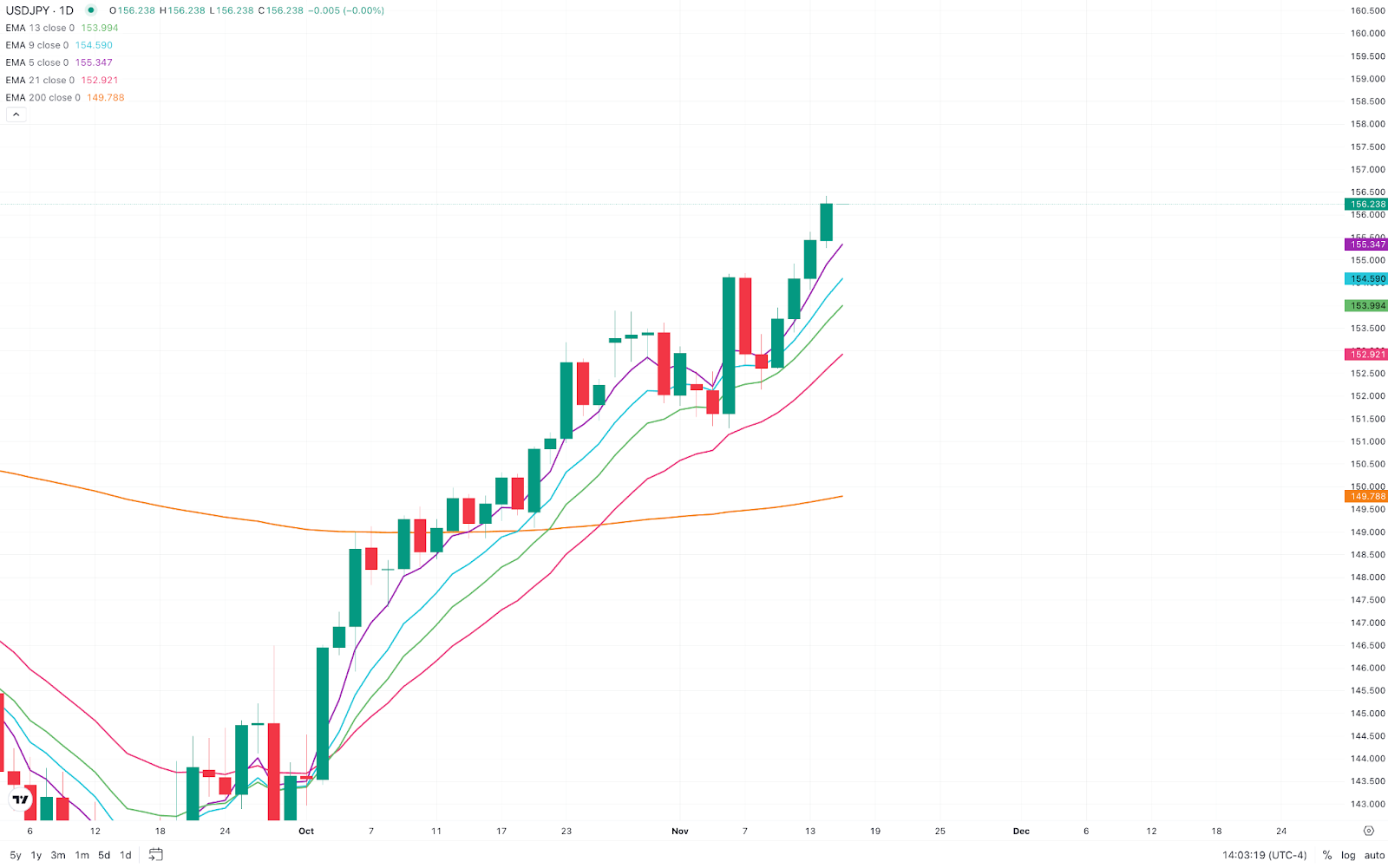
- The overall structure on a daily basis is aligned to the upside, giving full confirmation to only look for long setups.
Kill Zone Confirmation
- Time of setup: 4:00 AM New York Time, inside the London Kill Zone.
Fair Value Gap Formation
- A clean 3-candle Fair Value Gap (FVG) formed on the 30-minute chart.
Trident Pattern Validation
- A doji candle formed immediately after the FVG, with a wick into the FVG’s 50% level (consequent encroachment).
- This wick showed seller aggression was absorbed by buyers, confirming a high-probability reversal area.
- The candle that followed closed below the doji’s high, validating the Trident pattern.
Entry, Stop Loss, and Risk Parameters
- Entry: Immediately after the confirmation candle closed.
- Stop Loss: Just below the FVG candle's low.
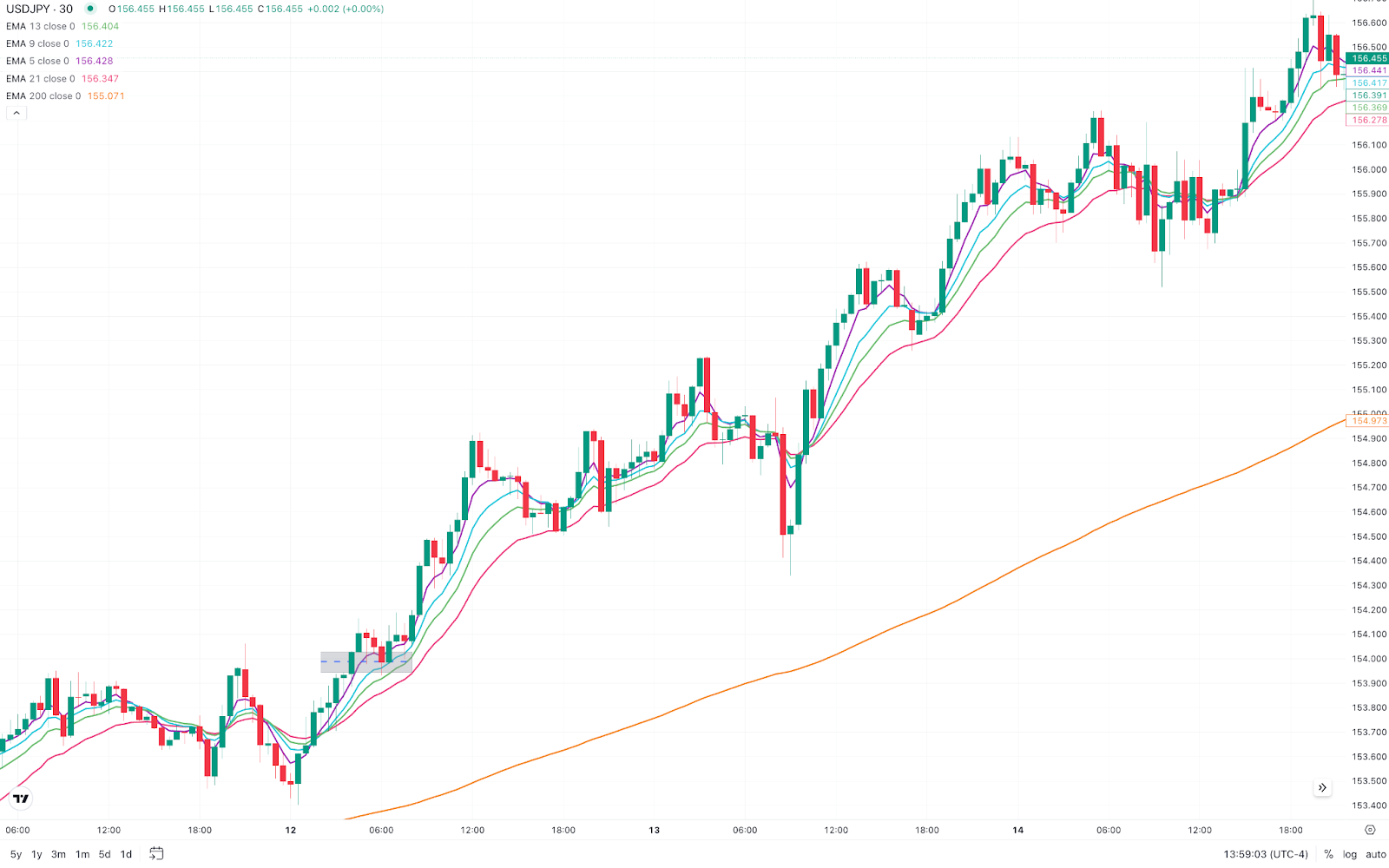
- Target: Managed using the daily chart trend — held as long as EMAs remained stacked.
Daily chart
How to Backtest This Unique High RR Strategy
The fastest way to test this Unique High RR strategy is with TradeZella's automated no-code backtesting. Define your rules in plain English, hit run, and TradeZella runs them across 11+ years of historical data in seconds, then shows you every individual trade along with your win rate, profit factor, and expectancy instantly, without you stepping through a single chart. It is the quickest way to see whether the setup holds up before you risk a dollar.
You can also test it manually by replaying the market bar by bar. Load 11+ years of historical data, set up your 30-minute chart with the stacked EMAs and the 200 EMA the way you trade live, use the daily chart for bias, and replay the London Kill Zone. Confirm the EMAs are cleanly stacked in your direction, wait for a 3-candle fair value gap inside the window, mark the 50% level, then watch for the Trident Pattern: a doji that wicks into the midpoint followed by a confirmation candle that closes below the doji high. When the pattern validates, place your trade with automatic position sizing and drag your stop and target directly on the chart, managing the exit off daily structure. Every trade gets logged automatically with your entry, exit, position size, and P&L. Add notes on what you saw, tag mistakes, and review the session the same way you would a live trading day. After 30 to 50 trades, you can see your win rate, profit factor, and expectancy on this specific setup. Manual replay is the best way to build screen time and a real feel for the setup.
When you start trading live, import your live trades into TradeZella, the AI trading journal that does the journaling for you. Your backtest results and live results live in the same platform, so you always know how the strategy performs in testing vs how it performs with real money, without switching between tools or maintaining separate spreadsheets.
Start Backtesting This Strategy Using TradeZella
Frequently Asked Questions
What is the Unique High RR strategy?
The Unique High RR strategy is a London session swing trading model designed to capture high reward-to-risk trades. It combines stacked EMAs for trend structure, fair value gaps, and time-based entries, and is centered on a specific entry formation called the Trident Pattern. Trades are taken only when every condition aligns inside a narrow window, favoring quality over quantity and riding trend continuation on the daily chart for large reward multiples.
What is the Trident Pattern?
The Trident Pattern is the entry formation at the heart of this strategy. A 3-candle fair value gap forms on the 30-minute chart, you mark its 50% level, then a small-bodied doji must form and wick into that midpoint, showing sellers tried to push price down but buyers absorbed them. The candle after the doji must close below the doji high to confirm. If it closes above the doji high, the setup is invalid. You enter on the confirmation candle or place a limit at the 50% level.
What is the London Kill Zone?
The London Kill Zone is the only window this strategy trades, between 3:00 AM and 6:30 AM New York time, when momentum and volatility tend to align. Entries must occur inside that window, and the fair value gap should form between roughly 2:30 and 4:00 AM. Gaps outside the kill zone are ignored. Limiting trading to this window is what keeps the model from overtrading, with a maximum of about three and a half hours of active trading per day.
Which EMAs does this strategy use?
The strategy uses the 5, 9, 13 (or 15), and 21 EMAs to define trend structure and momentum, and they must be cleanly stacked in the direction of the trade. If they are crossing or tangled, the setup is invalid. The 200 EMA sets the overall bias: above it you only take longs, below it you only take shorts. A candle strength indicator on the daily chart helps confirm momentum before you commit to a setup.
What instruments and timeframe does this strategy use?
The 30-minute chart is the only chart used to find entries, while the daily chart sets bias and take-profit targets. It is built for futures and forex and works best on trending markets, especially Gold and the Nasdaq. Valid pairs include USDJPY, EURUSD, GBPUSD, NZDUSD, USDCAD, and Gold. On Gold, a hard stop is avoided in favor of a closing-candle filter, since backtesting showed Gold often makes deep liquidity wicks before running.
Can I backtest the Unique High RR strategy?
Yes. You can test this strategy using TradeZella's backtesting with 11+ years of historical data. Replay the London Kill Zone on the 30-minute chart, confirm your EMAs are stacked and the 200 EMA bias, wait for a fair value gap and the Trident Pattern, then enter on the confirmation candle and manage the exit off daily structure. Every trade logs automatically with entry, exit, position size, and P&L. Add notes, tag mistakes, and review the session the same way you would a live trading day. After 30 to 50 trades you can see your win rate, profit factor, and expectancy on this specific setup before risking real money.
What is TradeZella backtesting?
TradeZella backtesting lets you test a trading strategy against 11+ years of historical market data across forex, futures, stocks, and crypto, down to seconds-level timeframes. You can do it two ways. Replay the market bar by bar and place trades as if you were trading live, with your own timeframes, automatic position sizing, and stops and targets you drag right on the chart, and every trade logs automatically with entry, exit, size, and P&L. Or use automated no-code backtesting: define your strategy rules in plain English and the engine runs them across years of data in seconds, returning every individual trade it took with the exact setup drawn on the chart, so you see why each trade fired instead of just an equity curve. Zella AI then analyzes the results and flags what to fix.